 Continue with Facebook
 Continue with Google
 Continue with Apple
Brahms & the Art of Difficulty
Details
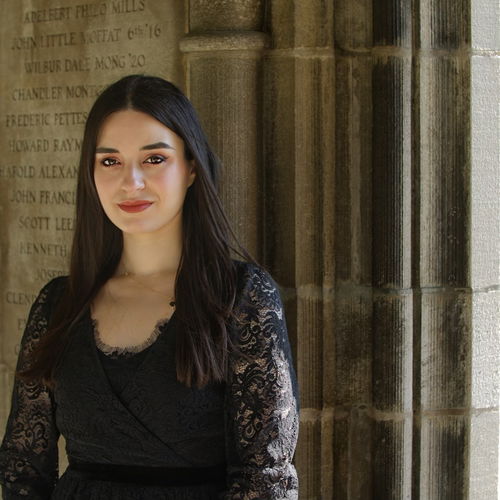
Theodora Serbanescu-Martin full profile / piano / 1 musician
Full program notes
~ Introduction & Discussion ~
Brahms, after J. S. Bach — Chaconne in D minor for the left hand alone
Brahms — Theme and Variations in D minor, Op. 18b (1860)
(after the second movement of the String Sextet No. 1 in B-flat major, Op. 18)
Brahms — Fantasien, Op. 116 (1892)
I. Capriccio in D minor — Presto energico
II. Intermezzo in A minor — Andante
III. Capriccio in G minor — Allegro passionato
IV. Intermezzo in E major — Adagio
V. Intermezzo in E minor — Andante con grazia ed intimissimo sentimento
VI. Intermezzo in E major — Andantino teneramente
VII. Capriccio in D minor — Allegro agitato
~ Small Break ~
Brahms — Variations and Fugue on a Theme of Handel, Op. 24
Historical context
"Brahms & the Art of Difficulty"
What happens when difficulty is not something a pianist simply overcomes, but something the music asks us to hear?
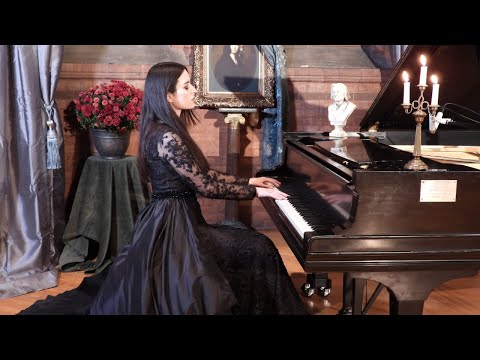
In this Romantic Salon, pianist and musicologist Theodora Serbanescu-Martin brings Brahms’s music into conversation with the images, objects, texts, and bodily disciplines that surrounded nineteenth-century pianism. The program moves from Brahms’s extraordinary left-hand transcription of Bach’s Chaconne through the Theme and Variations from the First String Sextet, the late Fantasien, Op. 116, and the monumental Variations and Fugue on a Theme by Handel, Op. 24.
The concert takes the salon not straightforwardly as a resurrected historical setting, but as a way of thinking: a space in which music, literature, visual art, material objects, archival traces, and spoken commentary can speak across media without collapsing into a single explanation. A grotesque by Jacques Callot, the image of the thumbscrew, exercises, manuscripts, historical accounts of injured hands, and other remnants of pianistic practice appear alongside the music—not as illustrations, but as parallel forms of knowledge that reshape what difficulty can mean.
Across the program, a hidden continuum emerges between exercise, transcription, variation, and fantasy. Brahms repeatedly turns constraint into invention: one hand must suggest the fullness of Bach’s Chaconne; six instrumental voices are compressed onto a single keyboard; late fantasies conceal the logic of technical exercise; Handel’s theme is subjected to increasingly elaborate transformations until variation itself begins to resemble bodily discipline.
"Brahms & the Art of Difficulty" asks us to hear virtuosity differently. Rather than imagining technique as effortless mastery, the salon attends to repetition, resistance, weight, compression, adaptation, and strain—to the moments when the labor of making music remains audible and becomes expressive in its own right.
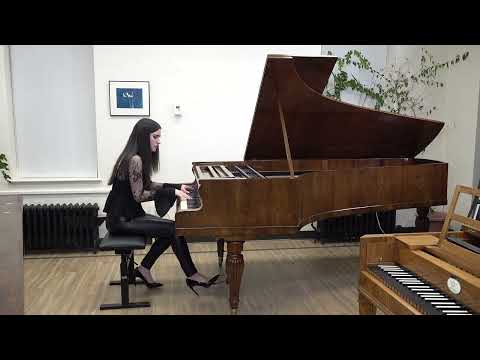
Videos from this player

Audio from this player
Brahms Klavierstücke Op. 116: I. Capriccio in D minor
Brahms Klavierstücke Op. 116: II. Intermezzo in A minor
Brahms Klavierstücke Op. 116: III. Capriccio in G minor
Brahms Klavierstücke Op. 116: IV. Intermezzo in E Major
Brahms Klavierstücke Op. 116: V. Intermezzo in E minor
Brahms Klavierstücke Op. 116: VI. Intermezzo in E Major
Brahms Klavierstücke Op. 116: VII. Capriccio in D minor
Other programs from this ensemble
Exploring Baroque & Romantic Fantasias
- Musician profile: Theodora Serbanescu-Martin
-
 Instruments:
Piano
Instruments:
Piano
-
- Musician profile: Theodora Serbanescu-Martin
-
Instruments:
2 pianos
- Musicians: Theodora Serbanescu-Martin, Miles Graber
-
- Musician profile: Theodora Serbanescu-Martin
-
Instruments:
Solo piano
-
Death, Dead Hands, & Difficulty @ Piano
- Musician profile: Theodora Serbanescu-Martin
-
Instruments:
solo piano
-
- Musician profile: Theodora Serbanescu-Martin
-
Instruments:
Piano
-
Liszt Devoted: Harmonies Poétiques, Pt 1
- Musician profile: Theodora Serbanescu-Martin
-
Instruments:
solo piano