 Continue with Facebook
 Continue with Google
 Continue with Apple
From Turmoil to Tenderness
Details
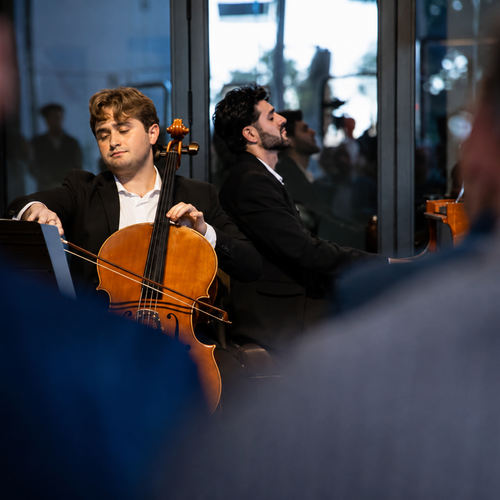
Jayden Lamcellari & Itamar Esformes| Cello & Piano Duo full profile / Cello & Piano Duo / 2 musicians
Other players: Jayden Lamcellari and Itamar Esformes
Full program notes
From Turmoil to Tenderness
This program brings together two towering masterpieces for cello and piano that reveal strikingly different emotional worlds. Shostakovich’s Sonata in D minor, Op. 40 speaks with raw intensity, irony, tenderness, and quiet vulnerability, while Brahms’s Sonata No. 2 in F major, Op. 99 unfolds with warmth, nobility, and expansive lyricism. Together, these works trace a journey from introspection and tension toward consolation and human connection, celebrating the extraordinary expressive bond between cello and piano.
Historical context
Dmitri Shostakovich
Sonata for Cello and Piano in D minor, Op. 40
Composed in 1934, Shostakovich’s Cello Sonata emerged during a turbulent period in both the composer’s personal life and the rapidly changing Soviet world around him. Yet rather than telling a single story, the sonata seems to move between contrasting states of mind, intimacy and agitation, tenderness and irony, solitude and explosive energy.
The opening movement begins almost as a private conversation. A long, searching cello line unfolds over the piano, creating a world of introspection and restrained emotion. As the movement develops, this intimacy gives way to increasing tension before eventually retreating into an eerie stillness.
The second movement transforms that tension into biting humor and restless energy. Its driving rhythms and sharp gestures reveal the sardonic side of Shostakovich that would become such an unmistakable feature of his musical voice. The slow third movement brings us somewhere entirely different: sparse, exposed, and deeply vulnerable, it feels almost like a solitary reflection after the surrounding turbulence.
The finale suddenly releases this intensity through wit, movement, and theatrical energy. Yet even its humor carries an edge. Throughout the sonata, Shostakovich constantly shifts the emotional ground beneath us, leaving us uncertain whether to laugh, grieve, or simply listen.
Johannes Brahms
Sonata for Cello and Piano No. 2 in F major, Op. 99
More than half a century earlier, Brahms created a very different emotional landscape. Written in 1886 during a productive summer spent at Lake Thun in Switzerland, his Second Cello Sonata is expansive, passionate, and filled with a remarkable sense of freedom.
From its opening moments, the music seems unable to contain its energy. The piano trembles beneath the cello’s soaring gestures, immediately establishing the two instruments as equal partners. Brahms does not treat the piano as accompaniment; instead, cello and piano challenge, support, interrupt, and embrace one another throughout the work.
The second movement turns inward, offering one of the sonata’s most intimate landscapes, while the third movement erupts with tremendous rhythmic force and urgency. After this intensity, the finale brings a striking change of character: graceful, lyrical, and almost conversational, it allows the sonata to arrive not through overwhelming triumph, but through warmth and humanity.
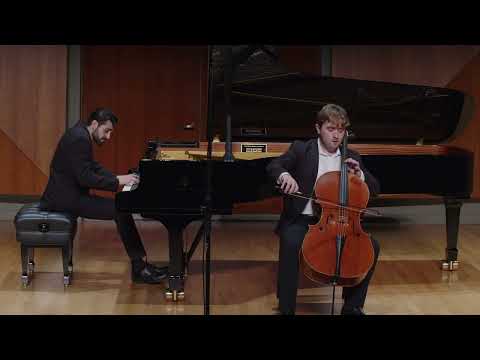
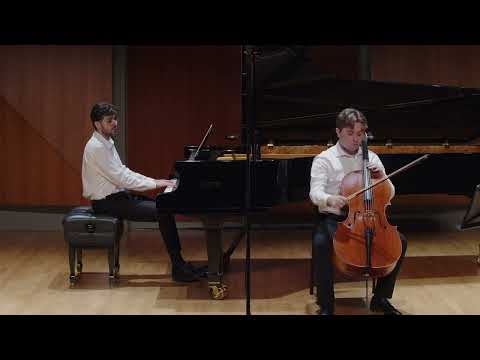
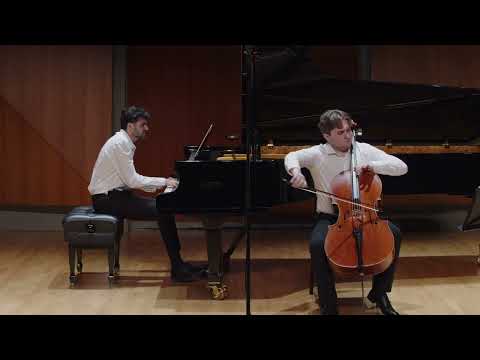
Videos from this ensemble
Other programs from this ensemble
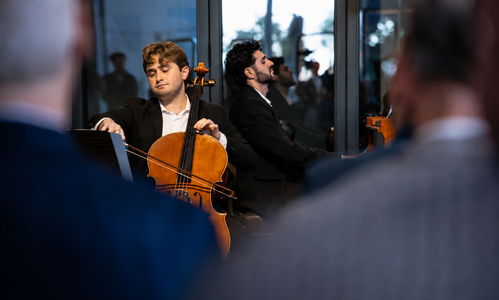
- Musician profile: Jayden Lamcellari & Itamar Esformes| Cello & Piano Duo
-
 Instruments:
Cello & Piano Duo
Instruments:
Cello & Piano Duo
- Musicians: Itamar Esformes, Jayden Lamcellari & Itamar Esformes