 Continue with Facebook
 Continue with Google
 Continue with Apple
Quasi Una Ballata
Details
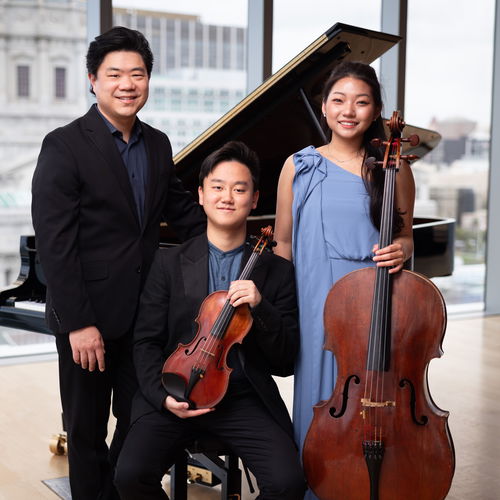
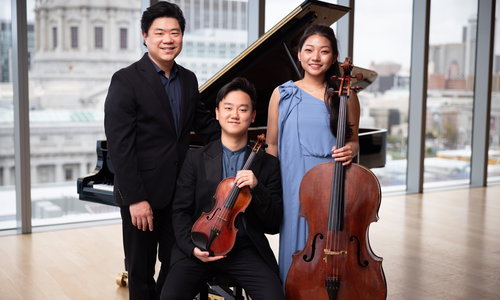
Ethea Trio full profile / Piano Trio / 3 musicians
Full program notes
Haydn Piano Trio No. 39 in G major, Hob. XV/25
Novák Piano Trio No. 2 in D minor, Op. 27 “Quasi Una Ballata”
Schumann Piano Trio No. 3 in G minor, Op. 110
Historical context
“Like a ballad”. Vitězslav Novák’s own subtitle for his Second Trio describes the spirit of this program.
A ballad tells a story usually shadowed by fate, and not always resolved by the end. Dramatic and emotional, they evolved from danced songs and folklore and folk storytelling, and involve themes of romantic love, tragedy, nostalgia, and longing.
Haydn opens with a smile and ends with fire. His “Gypsy” Trio closes with one of the most untamed movements in his output—a rondo in the style of a Hungarian verbunkos dance.
Novák’s Trio was written in 1902, in the wake of a period Novák himself described as “the blackest Baudelairean pessimism.” Cast as a single movement in four episodes, the piece draws on the folk colors of his Moravian homeland, but strips them of their rustic warmth and turns them toward something heroic, sardonic, and tragic.
Schumann's Third Trio was composed in 1851, during a year of gathering shadows. It is restless, searching, and strange, but ends, astonishingly, with a movement marked “mit Humor”—"with humor.”
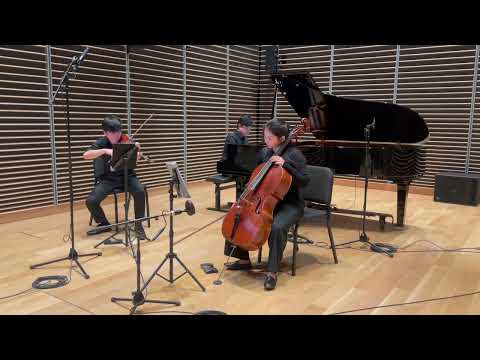
Videos from this ensemble
Other programs from this ensemble
- Musician profile: Ethea Trio
-
 Instruments:
Piano Trio
Instruments:
Piano Trio
- Musicians: Jon Lee, Ethea Trio
-
Lignes de Fuite (Lines of Escape)
- Musician profile: Ethea Trio
-
Instruments:
Piano trio
